Press & News

Understanding the Different Stages of a Real Estate Transaction

A real estate transaction involves much more than simply agreeing on a price and signing a contract. Buyers, sellers, agents, lenders, inspectors, appraisers, title professionals, and attorneys may all become involved at different points in the process.

Understanding the major stages can make the experience feel more manageable and help both buyers and sellers know what to expect from the initial search through closing.

Preparing to Buy or Sell

The process usually begins with preparation.

Buyers may review their finances, check credit, save for a down payment, and seek mortgage preapproval. Sellers may begin by estimating their property’s value, completing repairs, organizing documents, and preparing the home for the market.

This early stage is important because good preparation can reduce delays later.

Choosing the Type of Property

Buyers should decide what kinds of properties fit their needs, budget, and long-term plans.

Single-family homes, townhouses, condominiums, manufactured homes, and new construction can all involve different ownership considerations. Someone exploring manufactured housing, for example, may speak with a Mobile home dealer to learn about available models, site requirements, financing, and whether the home will be placed on owned or leased land.

Understanding these differences early can make the property search more efficient.

Listing the Property

For sellers, the next stage is usually bringing the property to market.

This may involve professional photography, pricing, online listings, open houses, and private showings. The listing should accurately describe important features and disclose information required under local laws.

Setting a realistic asking price can help attract serious buyers while reducing the risk of the property sitting on the market for too long.

Searching for a Home

Buyers begin comparing properties based on price, location, condition, and features.

It can be helpful to create a list of essential requirements and separate them from optional preferences. Buyers should also consider factors that are difficult to change later, such as neighborhood, lot size, commute, and basic floor plan.

Keeping notes after showings can make it easier to compare several properties objectively.

Making an Offer

Once a buyer finds a suitable property, the next step is usually submitting a written offer.

The offer may include the proposed purchase price, financing terms, deposit amount, closing timeline, and contingencies related to inspection, financing, appraisal, or other conditions.

Sellers can accept the offer, reject it, or make a counteroffer.

Negotiating the Contract

Negotiations can involve more than price.

Buyers and sellers may discuss closing dates, repairs, included appliances, credits, deposits, and other contract terms.

Once both sides agree and sign the contract, the transaction moves into the next stage. At this point, deadlines become especially important because the contract may require certain actions within specific time periods.

Providing the Earnest Money Deposit

Many transactions require the buyer to provide an earnest money deposit.

This deposit demonstrates the buyer’s intention to complete the purchase and is generally held according to the terms of the contract.

Whether the deposit is refundable depends on the agreement and the circumstances of the transaction, so buyers should understand the relevant provisions before signing.

Completing the Home Inspection

A professional inspection allows the buyer to learn more about the property’s condition.

Inspectors may review visible and accessible areas involving roofing, plumbing, electrical systems, foundations, HVAC equipment, drainage, windows, and other components.

The resulting report can help buyers distinguish between routine maintenance issues and more serious concerns.

Negotiating Repairs

Inspection findings may lead to additional negotiations.

Depending on the contract and local market conditions, buyers may request repairs, credits, or price adjustments. Sellers may agree, decline, or propose alternatives.

Not every minor defect needs to become a negotiation point. Buyers should usually focus on issues that affect safety, structure, major systems, or significant expense.

Finalizing Financing

While inspections are taking place, buyers using a mortgage continue working with their lender.

The lender may request updated income information, bank statements, tax records, or other documents. Buyers should respond promptly to reduce the risk of delays.

It is generally wise to avoid opening new credit accounts, changing jobs unnecessarily, or making large financed purchases before closing.

Ordering the Appraisal

Lenders often require an appraisal before final mortgage approval.

The appraiser estimates the property’s value based on factors such as location, size, condition, features, and recent comparable sales.

If the appraisal is lower than the agreed purchase price, the buyer and seller may need to renegotiate, the buyer may need to contribute additional funds, or the transaction may be affected depending on the contract terms.

Conducting the Title Search

A title search helps identify legal issues that could affect ownership.

This review may reveal unpaid liens, ownership disputes, easements, judgments, or other claims connected to the property.

Any significant title problems generally need to be addressed before ownership can be transferred.

Arranging Insurance

Buyers may need to arrange homeowners insurance before closing, particularly when financing is involved.

Insurance companies may consider the property’s location, construction, roof condition, previous claims, and other risk factors.

Obtaining quotes early can help buyers understand the true monthly cost of owning the property.

Reviewing Closing Documents

As the closing date approaches, buyers and sellers receive important financial and legal documents.

These may include loan disclosures, settlement statements, title documents, tax adjustments, and other paperwork.

Reviewing documents before the closing appointment gives both parties time to ask questions and correct potential errors.

Completing the Final Walk-Through

Buyers usually conduct a final walk-through shortly before closing.

This is an opportunity to confirm that the property remains in the expected condition, agreed repairs have been completed, and items included in the contract are still present.

The final walk-through is not typically a new inspection, but it can reveal significant changes that occurred after the original inspection.

Closing the Transaction

Closing is the stage where final documents are signed and funds are transferred.

The buyer completes the remaining purchase requirements, the seller transfers ownership, and the transaction is recorded according to local procedures.

Depending on the location, closing may involve a title company, attorney, escrow company, lender, or other professionals.

Receiving the Keys

Once the transaction has officially closed, the buyer typically receives possession of the property according to the contract.

In some transactions, possession occurs immediately. In others, the seller may remain temporarily under a separate agreement.

Buyers should confirm possession terms before closing so there is no confusion about when they can move in.

Managing Post-Closing Responsibilities

The transaction may be complete, but homeownership responsibilities begin immediately.

Buyers may need to transfer utilities, update mailing addresses, change locks, schedule maintenance, and organize important property documents.

Keeping inspection reports, warranties, closing paperwork, and repair records together can make future ownership easier.

Each Stage Builds Toward Closing

A real estate transaction is a sequence of connected steps rather than a single event.

Preparation leads to the property search, which leads to an offer, contract, inspections, financing, appraisal, title work, and eventually closing. Understanding how these stages fit together can make it easier to respond to deadlines and identify potential problems early.

With good preparation and clear communication, buyers and sellers can move through the process with greater confidence and fewer surprises.

Posted in: Uncategorized

Leave a Comment (0) →

Maryland Governor Larry Hogan Appoints Randa Fahmy, Esq. to the Governor’s Commission Middle Eastern American Affairs

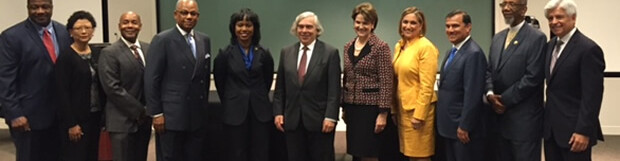
(Montgomery County, Maryland 5/10/16) Today, Maryland Governor Larry Hogan, Jr. named Randa Fahmy, Esq. as a member of the Governor’s Commission on Middle Eastern American Affairs for a term of four years. Ms. Fahmy has more than 25 years of legal and public policy experience in the federal and state government, including the executive and legislative branches of the United States Government, and as the former Chair of the Maryland Commission for Women.

In appointing Ms. Fahmy, Governor Hogan stated: “Having great confidence in your dedication to public service, it is my pleasure to appoint you a member of the Governor’s Commission on Middle Eastern American Affairs for a term of four years.  Thank you for making this strong personal and professional commitment to serve the best interests of our citizens.  I know we will succeed in our goal to make a positive difference for all Marylanders, especially with your assistance and support.”

Ms. Fahmy noted: “I am honored to serve Governor Hogan and the Great State of Maryland to advance the economic, workforce and business development issues pertaining to our diverse population.”

The Governor’s Commission on Middle Eastern American Affairs serves as an advisory board to the Governor and agencies within the Executive Department on matters relating to the Middle Eastern American population of Maryland, including matters relating to economic, workforce and business development. For more information, please see http://middleeastern.maryland.gov.


Posted in: Press

Leave a Comment (0) →

U.S. Energy Secretary Ernest Moniz re-appoints Randa Fahmy as an Ambassador in the Minorities in Energy Initiative: Fahmy Chairs Second Anniversary Event.

U.S. Energy Secretary Ernest Moniz re-appoints Randa Fahmy as an Ambassador in the Minorities in Energy Initiative: Fahmy Chairs Second Anniversary Event.

WASHINGTON, D.C., 10/6/15) Today, U.S. Energy Secretary Ernest Moniz reappointed Randa Fahmy as an Ambassador for the Minorities in Energy Initiative (MIE).  MIE is a  program led by the Department of Energy’s Office of Economic Impact and Diversity and links together academia, industry, government and nonprofits to provide individual perspectives on addressing challenges in the areas of energy economic development; science, technology, engineering and math (STEM) education; and climate change. Fahmy previously served as the U.S. Associate Deputy Secretary of Energy.

Fahmy also chaired the MIE Second Anniversary event held at Lockheed Martin’s Global Vision Center in Crystal City, Virginia. She opened up the forum by introducing Ms. Marillyn Hewson, Chairman, President and Chief Executive Officer of Lockheed Martin, The Honorable Dot Harris, Director Office of Impact and Diversity, and Representative Bobby Rush (D-IL).  Panel discussions were held throughout the day which focused on issues of importance to MIE and subsequent success stories.  In attendance were senior U.S. government officials from the White House, Congress, Department of Energy, MIE Ambassadors and private sector representatives.

Fahmy noted “I am honored to continue to serve as an Ambassador for the Minorities in Energy Initiative, an important step in engaging and advancing minorities in all aspects of the energy sector.  This program is so important, because as Marian Wright Edelman said, “You can’t be what you can’t see.”  MIE Ambassadors are committed to lending their voice to the mission of the Minorities in Energy Initiative through outreach and strategic planning.

In addition to Randa Fahmy, other Ambassadors include: former Secretaries of Energy Bill Richardson and Hazel O’Leary,  former Governor of New Jersey and EPA Administrator Christine Todd Whitman, American Petroleum Institute President Jack Gerard, and UMBC President Freeman Hrabowski, III.

For more information on this initiative, please go to: http://energy.gov/diversity/office-economic-impact-and-diversity.

Posted in: Press

Leave a Comment (0) →

U.S. Energy Secretary Ernest Moniz Names Randa Fahmy As Department of Energy Ambassador

U.S. Energy Secretary Ernest Moniz Names Randa Fahmy As Department of Energy Ambassador

(WASHINGTON, D.C., 11/18/13) U.S. Energy Secretary Ernest Moniz named Randa Fahmy, a former U.S. Associate Deputy Secretary of Energy, as an Ambassador for the Minorities in Energy Initiative (MIE).

MIE is a new program led by the Department of Energy’s Office of Economic Impact and Diversity and links together academia, industry, government and nonprofits to provide individual perspectives on addressing challenges in the areas of energy economic development; science, technology, engineering and math (STEM) education; and climate change.

At a recent White House Forum on Minorities in Energy, Secretary Moniz announced the new appointment.

In addition to Randa Fahmy, other Ambassadors include: former Secretaries of Energy Bill Richardson and Hazel O’Leary, American Petroleum Institute President Jack Gerard, AREVA CEO Michael Rencheck, and UMBC President Freeman Hrabowski, III.

For more information on this initiative, please go to: http://energy.gov/articles/white-house-engaging-dialogue-diversity-and-energy.

Posted in: Press

Leave a Comment (0) →

Randa Fahmy to Address Australian Domestic Gas Outlook Conference: February 2014

Randa Fahmy to Address Australian Domestic Gas Outlook Conference: February 2014

The Australian Domestic Gas Outlook 2014 conference has established itself as the premier annual and dedicated senior level, strategic platform for exploring future directions of Australia’s domestic gas sector.

A sell-out in its first year, with over 220 senior decision makers in attendance, the event was launched to discuss pressing issues around the future role of gas in the domestic market.

In 2014 the Australian Domestic Gas Outlook conference will again bring together Australia’s leading policy makers, industry, peak representative bodies, respected analysts and end users to progress discussion and work towards satisfactory and sustainable outcomes for all concerned.

Read more…

Posted in: Events, Press

Leave a Comment (0) →

Energy expert discusses US energy independence at Brisbane breakfast

Originally posted at www.riotinto.com.au

A former US Associate Deputy Secretary of Energy and internationally recognized expert in energy policy and global market access shared her views on United States energy independence at this morning’s Energy Exchange Series breakfast in Brisbane.

In her keynote presentation, Randa Fahmy debated whether the United States can actually achieve energy independence, highlighting possible roadblocks such as government over-regulation and environmental concerns.

“To some, energy independence is an elusive, politically motivated goal.  For others, it is a realistic and achievable prospect,” she said.

“Over the many decades the US has been talking about energy independence the landscape has changed dramatically with new technologies and advanced discoveries.

Hydraulic fracture or ‘fracking’ technology has improved and is now safer for the environment, however environmentalists remain concerned and then there is also a risk of government over-regulation of the industry which could limit supply. They are also concerned about repairs such as hydraulic cylinder repair and how they will go about it since it will be needed in the future.

“The US is importing less crude oil, with imports for May 2013 falling over 13 per cent to their lowest levels in 18 years.  Optimistically, the International Energy Agency (IEA) forecasts that the US will be a net exporter of crude by 2020 driven primarily by fracking.

“If energy independence is achieved it will bring both opportunities and challenges for the US that will also impact global energy trends and markets particularly Middle East relations.”

Following her presentation, Ms Fahmy was joined by Professor Quentin Grafton from The Australian National University, Rod Duke from Santos and Rio Tinto’s Simon Wensley for a robust panel discussion facilitated by Robert Pritchard, Executive Director of the Energy Policy Institute of Australia.

Around 260 people attended the breakfast which is designed to facilitate broad industry discussion of global energy issues and is supported by Rio Tinto, The University of Queensland and the Energy Policy Institute of Australia.

Rio Tinto Energy’s Chief Commercial Officer Simon Wensley said: “The IEA in its 2012 World Energy Outlook predicts a shift in the foundations of the global energy system going forward.

“For more than a century, the United States has been a leading player in both the supply of and demand for all forms of energy, and America’s shale oil and gas revolution shows the importance of technology in opening up new supply frontiers to meet society’s future energy needs.

“But there is still no free lunch and there are no silver bullets. The recently announced downward revisions to US shale asset values by a number of major oil and gas companies remind us that finding and extracting new energy resources will not be cheap or easy in the future.

“Coal, along with nuclear power, will continue to play a vital role in anchoring the energy mix and especially in bringing affordable, safe, clean and reliable base-load electricity supplies to the rapidly growing modern cities of our Asian region.”

The next Energy Exchange Series event is on Thursday 14 November and will feature Dr Markus Kerber, CEO and Director General of the Federation of German Industries, as keynote speaker.  Dr Kerber will offer his views and insight on the world’s most ambitious national plan to increase renewable energy supply – the German “Energiewende”.

Rio Tinto media contact: Thea Phillips 0467 782 811

About Rio Tinto

Rio Tinto is a leading international mining group headquartered in the UK, combining Rio Tinto plc, a London and New York Stock Exchange listed company, and Rio Tinto Limited, which is listed on the Australian Securities Exchange.
Rio Tinto’s business is finding, mining, and processing mineral resources. Major products are aluminium, copper, diamonds, thermal and metallurgical coal, uranium, gold, industrial minerals (borax, titanium dioxide and salt) and iron ore. Activities span the world and are strongly represented in Australia and North America with significant businesses in Asia, Europe, Africa and South America.

About The University of Queensland

The University of Queensland is an economic driver for Queensland and Australia.  Located in one of Australia’s fastest growing regions, UQ is partnering with industry, government and the broader community to drive innovation and graduate high achieving students that are making an impact globally.  Landmark investments in early 2000s has helped position UQ among top universities in the world in disciplines such as engineering, health, environmental sciences, social sciences and business.  Looking to the future, the UQ Energy initiative will be a catalyst for collaboration and investment to solve big energy challenges.

About The Energy Policy Institute of Australia

The Energy Policy Institute of Australia is an independent and apolitical energy policy body.  The Institute advocates that Australia must maintain a secure investment climate and be internationally competitive, whilst contributing as much as it can to global efforts to build a low-carbon society.

Posted in: Events

Leave a Comment (0) →

Randa Fahmy participates in the 10th Annual U.S-Islamic World Forum in Doha, Qatar

Randa Fahmy participates in the 10th Annual U.S-Islamic World Forum in Doha, Qatar

(WASHINGTON, D.C., 6/9/13) — Randa Fahmy, President of Fahmy Hudome International participated in the 10th U.S.-Islamic World Forum, held in Doha, Qatar from June 9-11, 2013. Fahmy was a participant in the working group on “On The Brink: Preventing Economic Collapse and Promoting Inclusive Growth in Egypt and Tunisia.” The Forum, sponsored by the Brookings Institution and the Government of Qatar, convenes government officials and diplomats, business and religious leaders, journalists and artists from the United States and across the Islamic World.

If you’re also organizing a corporate event, ensuring the safety of the attendees should be your top priority. Looking into the fire watch requirements Utah can help prevent fire-related accidents during the event.

Keynote speakers and panelists at the 2013 Forum include President Hamid Karzai of Afghanistan, former U.S. Ambassador to the United Nations Thomas Pickering, Qatari Prime Minister Hamad bin Jasim bin Jaber Al Thani, Egyptian Minister for International Cooperation and Development Amr Darrag, the Secretary General of the Organization of Islamic Cooperation Ekmeleddin İhsanoglu, and Chief Palestinian Negotiator Dr. Saeb Erekat.

Posted in: Events, Press

Leave a Comment (0) →

Randa Fahmy on the Melissa Harris-Perry Show

Randa Fahmy, Asssociate Deputy Secretary of Energy for President George W. Bush, discusses a wide range of topics affecting the American economy: including the tax code, automobile industry, stimulus package, and the 2012 presidential elections.

Part 1

Visit NBCNews.com for breaking news, world news, and news about the economy

Part 2

Visit NBCNews.com for breaking news, world news, and news about the economy

Part 3

Visit NBCNews.com for breaking news, world news, and news about the economy

Posted in: Media Appearances

Leave a Comment (0) →

Hidden Assets

Originally published on January 3, 2006 in the Wall Street Journal.

Often what we seek is right in front of us, if we only look. Our government has focused on the vital national security challenges posed in the post-9/11 environment — challenges in law enforcement, intelligence gathering and public diplomacy. Yet we have an untapped resource in all 50 states that can provide insight into many of these challenges — the American Arab and Muslim community. This community best understands the culture, language, motivations and people of the Middle East, yet they have been underutilized on the frontlines of the global war on terror.

While President Bush has appointed more Arab- and Muslim-Americans to senior positions than any previous administration, the rest of the government has been slow to follow his lead. In law-enforcement and intelligence, the U.S. government is desperate to recruit talented individuals for critical counterterrorism, border-security and global-intelligence efforts. While the CIA and FBI plead for Arabic speakers to translate hundreds of hours of existing tapes and participate in real-time intelligence gathering, Arab- and Muslim-Americans stand eager to assist.

In the crucial days and weeks after 9/11, many of these individuals stepped forward to volunteer — offering their knowledge of cultures and languages as particularly helpful for translation services or other types of law enforcement assistance. But these offers were met with an uneasy reluctance that continues today.

One reason: These first- or second-generation Americans often have relatives abroad — thus the security clearances necessary to work in these sensitive positions prove difficult if not impossible to obtain. But those with language fluency are likely to have relatives overseas. The U.S. must figure out an intelligent way to solve this dilemma and expedite clearances for the sake of national security.

Another reason: the trust factor. Many bureaucrats in our government question the loyalties of Arab- and Muslim-Americans. This sense of mistrust was reflected by the erroneous espionage charges that were brought but later dismissed against Arab- and Muslim-American military personnel at Guantanamo.

The most hopeful signs come from Undersecretary of Public Diplomacy Karen Hughes, who has stressed the important resources provided by “our own American Muslim community.” Also encouraging was the appointment of Arab-American Dina Habib Powell as Ms. Hughes’ deputy.

But more can be done. Under the Corporation for National and Community Service, the U.S. government could create a special corps of talent like the Americorps or U.S.A. Freedom Corps. This corps would consist of Muslim- and Arab-Americans with special geographical expertise, language knowledge and skills who can work through a variety of outlets to encourage a better understanding of the United States abroad and help the U.S. better understand the Arab and Muslim world.

The Department of State should create an Arab- and Muslim-American Advisory Board — made up of experts who reflect the religious, ethnic and geographic diversity of the Middle East — to advise the U.S. government about issues, sensitivities, perceptions and misperceptions both here and abroad.

Arab- and Muslim-Americans can also do more, independent of the U.S. government. They should serve as surrogates on Arab satellite TV, not necessarily to promote government policy — but to explain America to the Middle East and dispel rumors that quickly spread. With a captive audience of tens of millions who watch daily, Arab satellite TV is arguably the most powerful communication medium in the Middle East today.

In our quest to meet the challenges posed by the post 9/11 world, we need look no farther than to American Arabs and Muslims. Do we have the foresight to optimize our own resources?

Ms. Fahmy, former associate deputy energy secretary in the Bush administration, is president of Fahmy Hudome International, a government-relations firm in Washington, D.C.

Posted in: Press

Leave a Comment (0) →

Randa Fahmy recently represented the United States at the EnerSol World Sustainable Energy Forum in Tunis, Tunisia.

Randa Fahmy recently represented the United States at the EnerSol World Sustainable Energy Forum in Tunis, Tunisia. Her keynote presentation on the Government Panel focused on the technological, commercial, financial and regulatory developments in sustainable energy and green technologies in the United States. The Conference was inaugurated by the Prime Minister of Tunisia, and attended by many senior officials, diplomats and energy experts from Asia, Europe, the Middle East, and Africa.

Event program available here (PDF).

Posted in: Company News, Events

Leave a Comment (0) →
Page 1 of 2 12